


Filter changes and maintenance
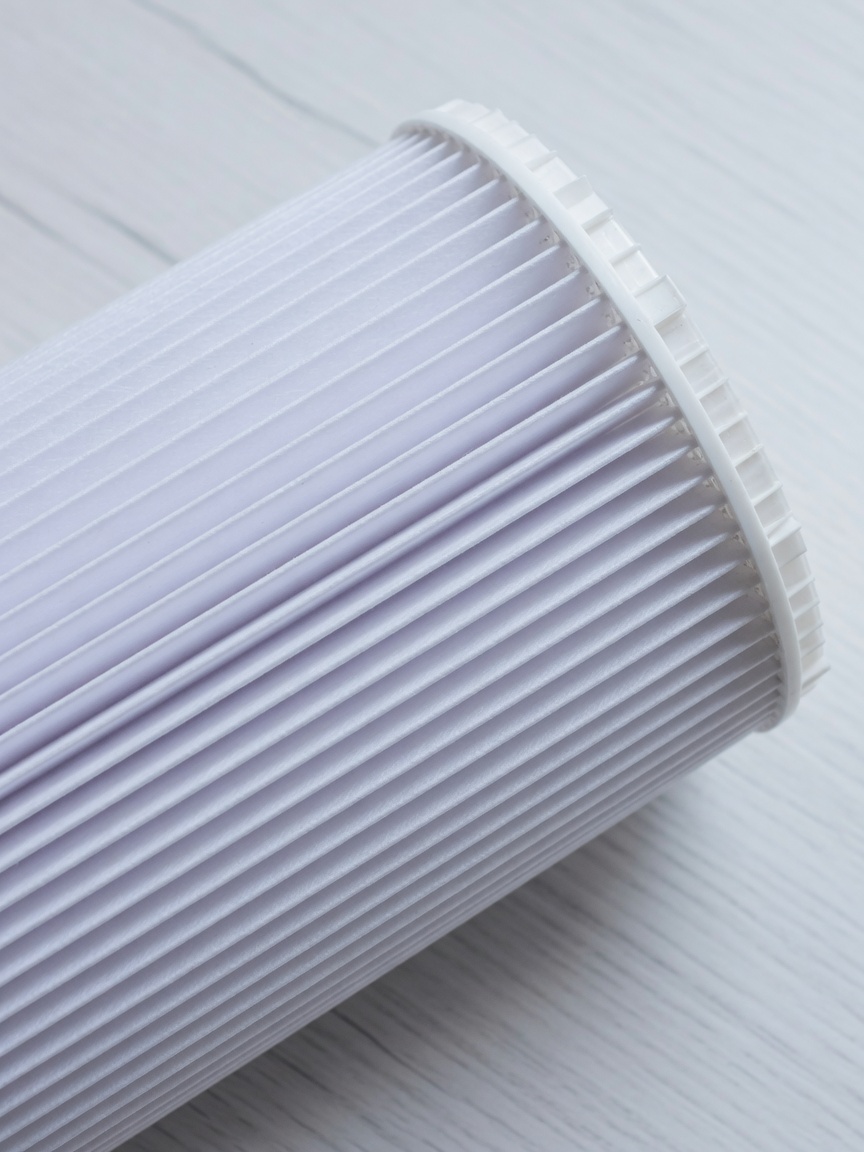
Balanced ventilation is low-maintenance, not no-maintenance. Almost everything an owner needs to do in a year comes down to filters — a job that takes fifteen minutes, twice a year. The rest is a short annual look at four things, and knowing what not to touch.
Why filters are the whole story
The filter is the only part of the system that is meant to get dirty. That is how it does its job: it captures pollen, road dust, soot and particulates before they reach the house. But a filter that has done its job long enough does not stop working — it simply becomes harder to pull air through.
That is where the problem starts. The unit does not stop, and there is no dramatic alarm. The fan compensates by working harder, power consumption rises, noise creeps up, and the airflow falls slowly enough that nobody notices. A system with clogged filters can be delivering well under half the design airflow and still look perfectly normal.
How often, really
The rule of thumb is twice a year. The real interval depends on what is outside the wall:
| Environment | Supply filter | Extract filter |
|---|---|---|
| Town, sheltered | 12 months | 12 months |
| Busy road, city | 6 months | 12 months |
| Farmland, dust, gravel road | 4–6 months | 6–12 months |
| Heavy pollen season | Extra change in spring | Unchanged |
The supply filter always fouls before the extract filter, because it meets the outdoor air. Change them together anyway — it is easier to remember and the price difference is small.
Changing a filter, step by step
- Put the unit into off or service mode from the panel. Do not simply pull the plug while the rotor is turning.
- Open the hatch. On most Ensy units it is held by quick catches and needs no tools.
- Pull out the old filters. Put them straight into a bag — they are full of what you did not want in the house.
- Wipe the filter slot with a damp cloth before fitting new ones.
- Fit the new filters with the airflow arrow the right way round. The arrow points in the direction the air travels.
- Close the hatch, start the unit and reset the filter counter in the panel.
That last step is the one people forget. If you do not reset the count, you lose the reminder next time.
The annual four-point check
- Exterior intake grille. Clear leaves, insect mesh clogged with seeds, and snow or ice in winter. A blocked grille has exactly the same effect as a clogged filter.
- Condensate drain. Check that it runs freely and that the trap has not dried out. A dry trap lets drain odour into the unit.
- Rotary heat exchanger. Check that the belt is intact and that the rotor actually turns. A broken belt means you heat the outdoors all winter without knowing it.
- Valves and ducts. Dust the supply and extract valves — but without turning them.
Signs something needs attention
- More noise than you are used to, especially a steady hiss that was not there before.
- Draughts or cold air from supply valves in winter — often a sign the post-heater is not working.
- Condensation on windows that did not mist up before.
- Odour from the extract, frequently a dried-out trap.
- A visible dust mark around a valve — air is leaking past where it should not.
What to leave to the installer
Valve positions were set during commissioning to hit the calculated airflow in each room. They look like something you can adjust, and they are not: turn one valve and you change the balance of the entire system, and the other rooms get the wrong amount. The same applies to fan curves, rotor speed and post-heater settings.
If the airflow feels wrong, the right order is: change the filter first, check the outdoor grille, and call the installer if it is still wrong.
A clogged filter does not stop the system. It just means you pay more for less air, with nothing warning you.
Genuine Ensy filters are available from your local distributor, in the right class and dimension for each unit. The distributor also stocks accessories, spare parts and documentation for your model.